Pedal Steel
A 10-string E9 pedal steel for Ableton Live that you can play without ever having touched one.
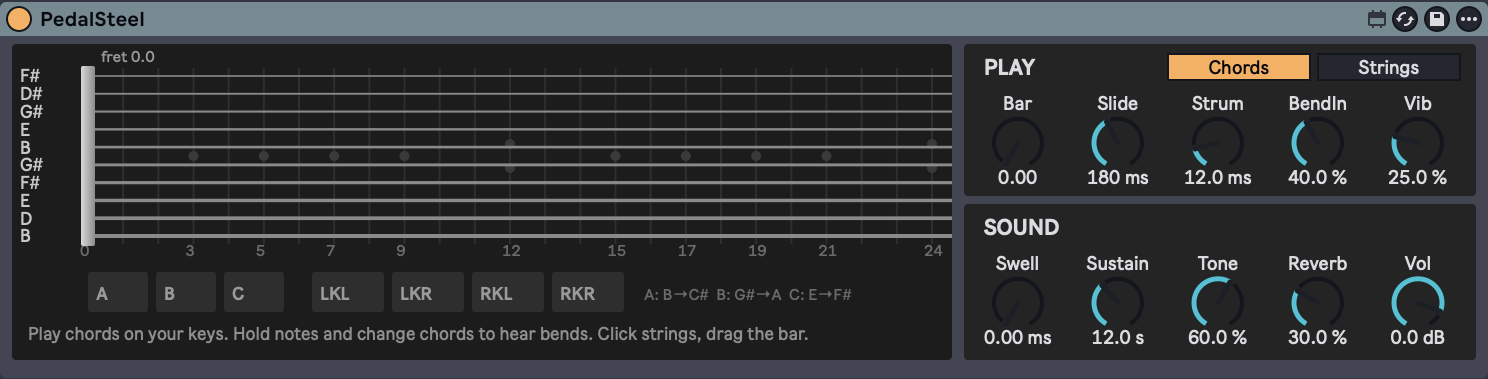
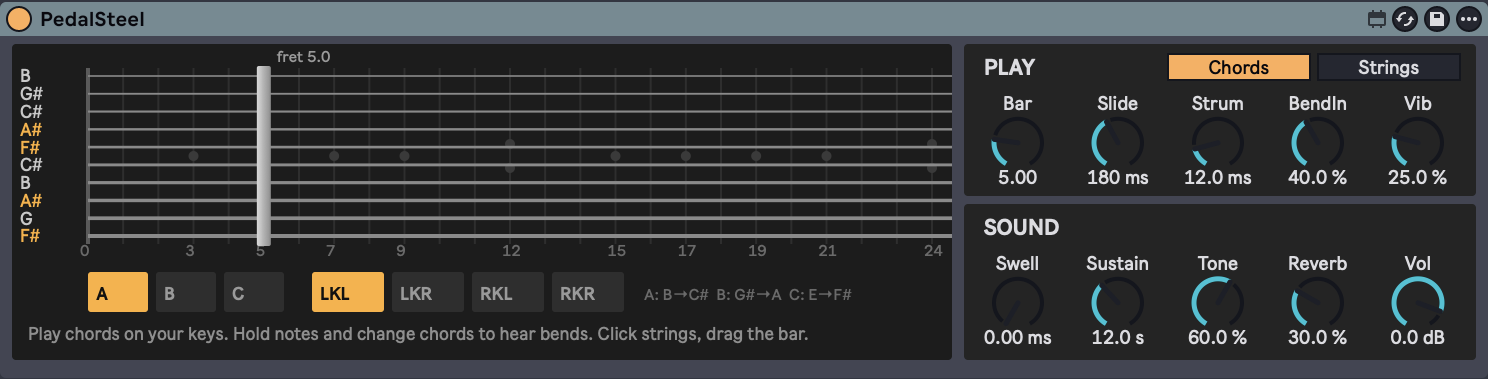
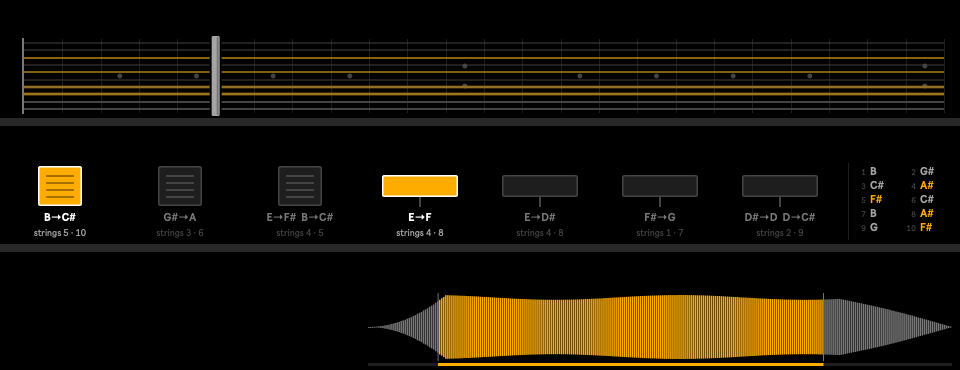
Play chords on a keyboard and it voices them the way a steel player would: one bar position plus pedals and knee levers. Change chords legato and the strings bend (pedals) or slide (bar) into the new chord instead of being picked again.
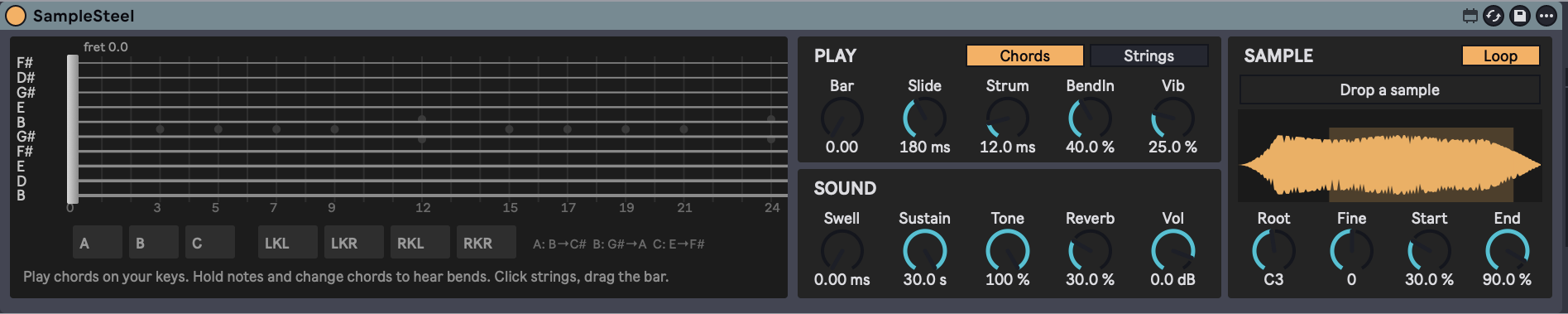
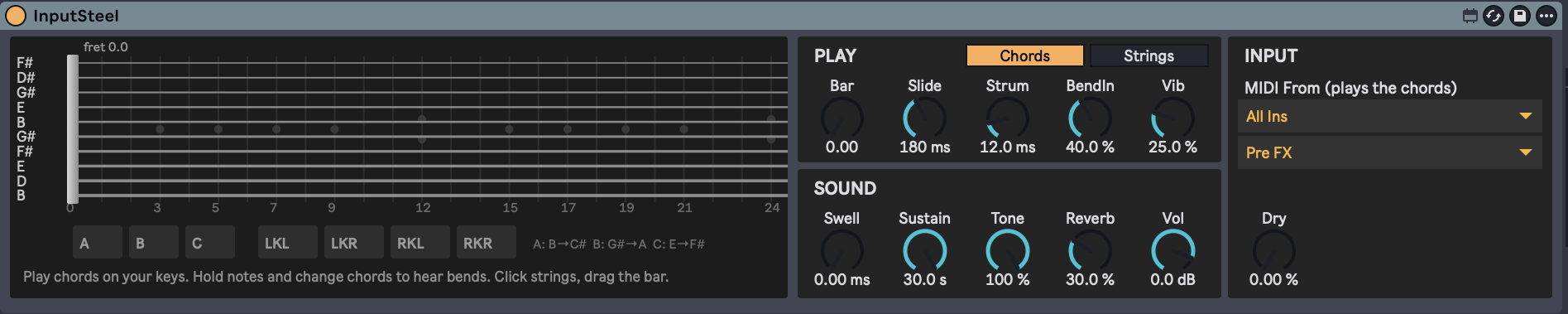
Three Max for Live devices share the same player: PedalSteel synthesizes the strings, SampleSteel plays any sample you drop in, and InputSteel turns the audio on a track into the steel.
Play it in your browser View on GitHub
Requires Ableton Live Suite with Max for Live. Copy the m4l/ folder somewhere (the .js files must stay next to the .amxd files) and drag a device onto a track.
The devices
Jump to: PedalSteel | SampleSteel | InputSteel | Push 3 | Playing | How it works
Each demo plays the same phrase: E major, then A major held legato (a pedal bend), then a slide up to C. All three were rendered from the devices' own code.
Playing
| Chords mode (default) | Strings mode (the real instrument) | |
|---|---|---|
| Keys | Any notes or chords. Out-of-range notes fold into the steel's range. | White keys C3–E4 pick strings 10→1. |
| Pedals | Chosen automatically; click one on the display to latch it. | White keys C2–B2 hold A, B, C, LKL, LKR, RKL, RKR. |
| Bar | Moves by itself; the Bar knob or dragging the neck slides it. | The Bar knob or dragging the neck. |
| Legato | Hold notes into the next chord to bend and slide. | — |
In both modes pitch bend slides the bar ±2 frets, the mod wheel adds vibrato, CC 64 sustains and CC 11 is the volume pedal. With MPE (Push 3, Seaboard, Linnstrument) each note's pitch bend bends just its string, pressure swells it and slide makes it brighter or darker.
How it works
- Real E9 tuning. Ten strings (F#4 D#4 G#4 E4 B3 G#3 F#3 E3 D3 B2) with the standard A/B/C pedals and four knee levers.
- Voicing like a player. Every chord is scored across 23 bar positions × 96 pedal combinations a player can physically press. The score prefers the melody on top, compact grips, few pedals, small bar moves and, above all, keeping ringing strings ringing.
- Pitch that moves while a string rings. Each string is a delay line one period long; its length follows a pitch ramp, so a pedal or bar move stretches the ringing string instead of starting a new note. Every string stays within ±1 cent of its target.
- The rest of the steel. A pick position and a pickup that comb-filter each string, sympathetic resonance between strings, 1 cent of cabinet drop per raise pedal, a bar vibrato that fades in after the pick, and the amp's spring reverb.
The player is steel_brain.js, the sound is a gen~ codebox, and the browser version runs both unchanged.